How Private School Supports Social Development in Elementary Students
- Alex Marchuk
- August 16, 2026
- 10 min read
PRIVATE SCHOOL
Table of Contents
- 1. Why Social Development Matters as Much as Academic Performance
- 2. How Private School Structure Supports Social Learning
- 3. The Role of Small Class Sizes in Social Development
- 4. How Consistent Adult Relationships Shape Social Growth
- 5. How Private Schools Address Conflict and Social Difficulty
- 6. Extracurricular and Community Dimensions of Private School Social Life
- 7. What Healthy Private School Social Development Looks Like
- 8. How Parents Can Support Social Development at Home
- 9. Frequently Asked Questions
Private school social development is one of the most underexamined dimensions of the private education decision. Most parents who research private schools focus primarily on academic outcomes, curriculum quality, and class size. Social development receives less attention, in part because it is harder to measure and in part because parents assume that children will develop socially wherever they are placed.
The reality is that the school environment a child spends six to eight hours in every day has a profound and lasting influence on how they learn to relate to peers, navigate authority, handle conflict, and understand themselves as social beings. This blog examines how a quality private school environment shapes social development and why these outcomes deserve as much consideration as academic ones.
1. Why Social Development Matters as Much as Academic Performance
Private school social development is not a secondary concern to be addressed after academic quality has been established. The two are deeply interconnected, and the research is clear about the direction of that connection: children who develop strong social and emotional skills perform better academically, not the other way around.
According to research from the Collaborative for Academic, Social, and Emotional Learning, students who participate in programs that deliberately support social and emotional development demonstrate significantly higher academic achievement than those who do not, along with reduced rates of behavioral problems and improved long-term outcomes across multiple life domains.
This means that a school’s approach to social development is not a soft consideration to be evaluated after curriculum and instruction. It is a core component of educational quality that directly affects the academic outcomes parents care most about. A private school that takes social development seriously, through the way it structures the day, manages conflict, supports relationships, and builds community, is providing an educational environment that is stronger across all dimensions, not just the social ones. Understanding what private school education includes beyond the academic dimensions helps parents make a more complete evaluation.
2. How Private School Structure Supports Social Learning
The structural features of most private schools create conditions for social development that differ meaningfully from larger public school settings. These structural differences are not accidental. They reflect intentional decisions about how to create an environment where children can develop as whole people rather than primarily as academic performers.
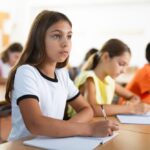
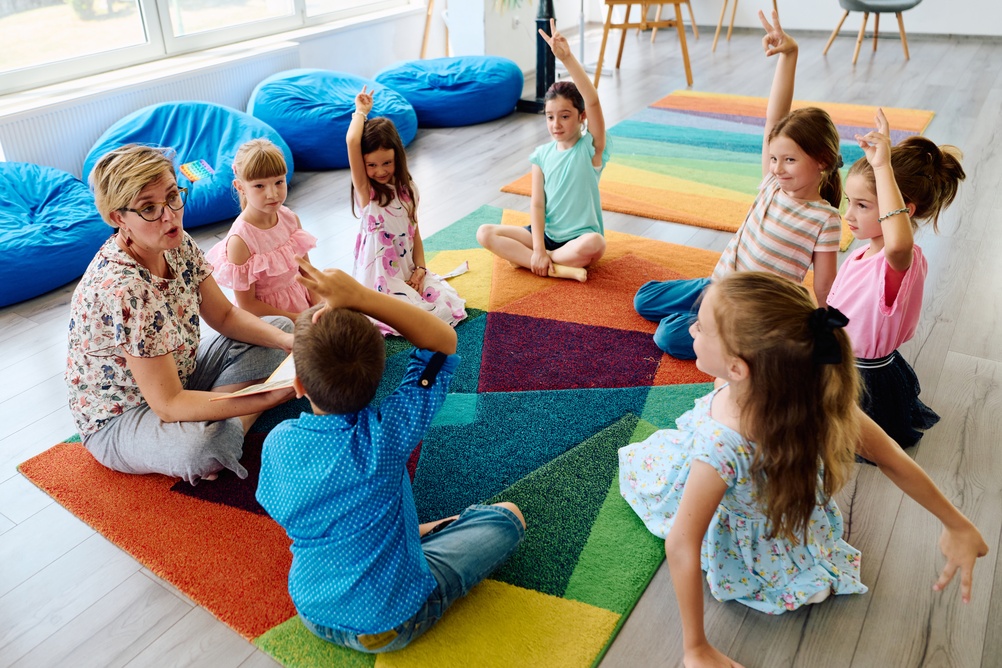
Consistent classroom environments with stable peer groups across the school year allow children to develop the kind of sustained peer relationships through which social learning happens most effectively. A child who spends the full school year with the same fifteen to twenty peers develops a social history with those peers that provides repeated opportunities to navigate the full range of interpersonal dynamics that social development requires.
Structured transitions between activities, consistent behavioral expectations, and clear community norms provide the predictable social environment that children need to develop confident social navigation. A school environment that feels unpredictable or where norms shift depending on the teacher or the setting creates social anxiety rather than social confidence.
The multi-year continuity of a K-8 program provides additional social developmental advantages. Children who move through the same school community from kindergarten to eighth grade develop identity, belonging, and social history that supports resilience during the socially complex middle school years in ways that entering a new school at sixth grade cannot replicate.
3. The Role of Small Class Sizes in Social Development
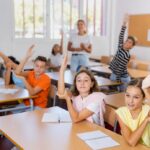
Private school small class sizes support social development in ways that go beyond academic instruction. In a smaller class, every student’s social experience is more visible to the adults in the environment, and the teacher’s ability to observe, respond to, and guide social dynamics is substantially greater than in a large classroom.
In a class of twelve to fifteen students, a teacher notices when a student begins eating lunch alone who usually sits with a group. They notice when the dynamic between two students shifts from friendly to tense. They notice when a student who normally participates actively becomes withdrawn. These observations are possible because there are fewer social dynamics to monitor simultaneously.
In a large classroom of twenty-eight to thirty students, these subtle social shifts are much harder to detect. Not because teachers are inattentive, but because the sheer number of relationships to monitor exceeds what any individual adult can track reliably. Social difficulties that a small classroom teacher would notice and address in the early stages can develop into entrenched patterns in a large classroom before an adult becomes aware of them.
Early adult awareness and intervention in social difficulties is one of the most significant protective factors available to children during the elementary years. The small class size environment that many private schools provide makes this kind of responsive adult support consistently possible in ways that larger settings cannot reliably sustain.
4. How Consistent Adult Relationships Shape Social Growth
One of the most important and least discussed features of private school social development is the relationship between students and the adults in their educational environment. Children develop social skills not only through peer interaction but through the models, guidance, and feedback provided by the adults they interact with daily.
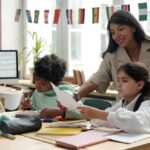
In a private school with low teacher turnover and a stable staff community, students develop relationships with teachers, administrators, and other staff members over multiple years. A student who works with the same STEM specialist from second grade through fifth grade develops a relationship that provides consistent mentorship, feedback, and social modeling that rotating annual teacher assignments cannot replicate.
These sustained adult relationships are particularly important for children whose home environments do not consistently provide the kind of social-emotional coaching and modeling that healthy development requires. A teacher who knows a student well, understands their social history within the school, and can provide calibrated guidance during social difficulties is one of the most powerful developmental assets a child can have.
The relationship between private school community and social development is also visible in the broader adult community of the school. Parent involvement, school-wide traditions, and community-building events all contribute to the social fabric that shapes how children understand themselves as members of a group larger than their immediate family.
5. How Private Schools Address Conflict and Social Difficulty
Social development necessarily involves conflict. Children who never experience peer conflict in a school setting are not being protected from social difficulty. They are being deprived of the structured, supported experiences through which the skills to manage it are built.
Quality private schools treat peer conflict not as a disciplinary problem to be eliminated but as a social learning opportunity to be navigated with adult support. When two students disagree, a well-designed private school provides guidance through a process rather than simply imposing a resolution from outside. Students are asked to articulate their own perspective, listen to the other person’s perspective, and work toward a resolution that both can accept. This process, repeated across many conflicts over many years, builds the conflict resolution skills that adult life constantly requires.
This approach is more resource-intensive than punitive conflict management. It requires teachers who understand social-emotional development, school policies that prioritize process over punishment, and a school culture that treats interpersonal difficulty as a normal part of development rather than a failure of student behavior. Private schools with small class sizes and invested professional staff are better positioned to implement this approach consistently than large schools where conflict management is primarily about restoring order.
According to research published by the American Psychological Association, students who learn conflict resolution skills in structured, supportive environments demonstrate significantly better social adjustment, academic performance, and mental health outcomes than those whose conflicts are managed primarily through punishment and exclusion.
6. Extracurricular and Community Dimensions of Private School Social Life
Social development in private school extends well beyond the classroom. Extracurricular activities, school events, performances, and community traditions all contribute to the social environment in which children develop.
Participation in organized activities within the school community, whether sports, arts programs, student leadership, or community service, provides children with structured social contexts where they interact with peers and adults outside the specific dynamics of their academic classroom. These contexts develop different social skills from classroom work and provide children who struggle in academic social settings with alternative arenas where they can build confidence and connection.
School traditions and shared experiences, including seasonal events, celebrations, field trips, and performances, build the collective identity and belonging that support individual social confidence. A child who feels genuinely part of a school community is more willing to take social risks, more resilient in the face of social difficulty, and more likely to develop the kind of secure social identity that supports healthy development across the middle school years.
Private schools that invest in building a genuine community rather than simply delivering instruction provide children with a social environment that supports development in ways that strictly academic programming cannot. Families evaluating the benefits of choosing a private school should ask specifically about extracurricular offerings, school traditions, and how the school builds community across grade levels.
7. What Healthy Private School Social Development Looks Like
Understanding what healthy social development looks like in a private school context helps parents evaluate whether a school is genuinely supporting it or simply claiming to.
Children who are developing well socially in a quality private school environment typically demonstrate the following across the elementary years. They are able to initiate and sustain peer friendships with some ease, even if they have a smaller social circle than others. They can navigate disagreement without the conflict becoming entrenched or requiring constant adult intervention. They demonstrate growing ability to understand other people’s perspectives and to adjust their communication accordingly. They show resilience after social setbacks rather than catastrophizing or withdrawing completely. And they express a genuine sense of belonging to their school community rather than experiencing it primarily as an obligation.
These outcomes are not guaranteed by any school environment. Children develop differently, and some children need more support navigating social development than others regardless of the quality of their school. But a quality private school environment creates conditions in which these outcomes are more consistently achievable across a wider range of students.
8. How Parents Can Support Social Development at Home
The social skills that private school education builds are reinforced or undermined by what children experience at home. Parents play a critical role in social development that no school can fully replace.
Some practical approaches that support the social growth your child is building at school:
- Talk about social experiences specifically and regularly. Ask your child about their relationships with specific peers, how a particular interaction went, and what they would do differently. General questions like how was school tend to produce general answers. Specific questions produce more honest and useful conversation.
- Validate social difficulty without solving it. When your child reports a social problem, the most helpful first response is to acknowledge how that feels rather than immediately proposing a solution or taking sides. Children who feel heard are more able to engage with problem-solving than those who feel managed.
- Model the social skills you want your child to develop. How you handle disagreement, manage frustration with others, and repair relationships after conflict teaches your child more about social behavior than any explicit instruction.
- Maintain contact with the school community. Parents who participate in school events, know their child’s teachers, and stay connected to the broader school community provide their child with a model of community engagement that reinforces the sense of belonging the school is building.
- Support friendships actively. Arranging time for your child to spend with school friends outside of school hours deepens the peer relationships that support social confidence. School friendships that only exist within school hours are more fragile and less developmentally valuable than those that extend into other contexts.
9. Frequently Asked Questions
The structural features of many private schools, including smaller class sizes, lower teacher turnover, more consistent peer groups, and a stronger emphasis on community building, create conditions that are generally more supportive of social development than the typical large public school setting. This does not mean that public schools cannot support strong social development, but it does mean that the structural advantages of private school tend to benefit social development as well as academic performance.
Ask specifically how the school handles peer conflict and what the resolution process looks like. Ask about teacher tenure and how long teachers typically remain at the school. Ask about extracurricular opportunities and how the school builds community across grade levels. And ask about how the school identifies and supports students who are struggling socially. A school with thoughtful, specific answers to these questions is one that takes social development seriously as a genuine outcome.
Signs that warrant attention include consistent reluctance to go to school that is not explained by academic difficulty, increasing withdrawal from activities or relationships the child previously enjoyed, changes in sleep or appetite that coincide with social difficulties at school, and explicit reports from the child of feeling excluded, disliked, or unsafe. Any of these patterns warrants a direct conversation with the child’s teacher rather than a wait-and-see approach.
Yes. Private school environments with small class sizes and consistent peer groups often provide more accessible social entry points for shy children than large school settings where the volume of social stimulation can be overwhelming. A shy child who spends the full school year with fifteen peers they know well has more opportunity to develop genuine confidence in social interaction than one who navigates a constantly shifting and large peer environment.
Social development is critically important across the full K-8 span. The early elementary years establish foundational social habits and self-concept. The middle elementary years develop more complex interpersonal skills including perspective-taking and conflict resolution. The upper elementary and middle school years involve the particularly challenging social dynamics of early adolescence, during which consistent adult relationships and a stable peer community provide critical support. Choosing a private school that supports your child’s growth across all of these stages is more valuable than optimizing for any single period.
It depends on the school and the child’s age. Some schools include parents in the room, while others prefer to meet with the child alone for at least part of the visit.
Key Takeaways
Private school social development is a core educational outcome that directly influences academic performance, long-term wellbeing, and life success. The structural features of quality private schools, including small class sizes, consistent peer groups, sustained adult relationships, and intentional community building, create conditions for social development that differ meaningfully from larger school settings. Conflict is a normal and valuable part of social development, and quality private schools treat it as a learning opportunity rather than a disciplinary problem. Extracurricular activities and school traditions contribute to the sense of belonging that supports individual social confidence. Parents play a critical role in reinforcing the social skills the school is building, both through how they talk about social experiences and through how they model the behaviors of healthy adult relationships.
See the Community Your Child Would Be Part of Every Day
Schedule a visit and observe not just what is being taught but how students interact with each other and with adults, how the community feels, and whether it is the kind of environment where your child would genuinely thrive.
Disclaimer: The information in this blog is intended for general educational purposes only. The discussion of social development and private school environments reflects broadly recognized research and general educational knowledge. No specific social or academic outcomes have been guaranteed or implied. Individual children develop differently, and parents are encouraged to consult with educational and mental health professionals when making decisions about their child’s school environment.
References
- Collaborative for Academic, Social, and Emotional Learning. What Does the Research Say? https://casel.org/fundamentals-of-sel/what-does-the-research-say/
- American Psychological Association. Social-Emotional Learning in K-12. https://www.apa.org/education-career/k12/social-emotional