
Learn & Explore Academy

Diverse young students actively exploring science models and tools in a lab setting illustrating how STEM education and resilience develop together through hands-on investigative learning

How STEM Education and Resilience Work Together in Children

STEM education and resilience are connected through one of the most fundamental features of genuine scientific and engineering work: the expectation that things will not work the first time. In a well-designed STEM program, failure is not an accident or an aberration. It is a built-in part of the process, and learning to respond to it productively is one of the most valuable things a child can develop during their elementary years.

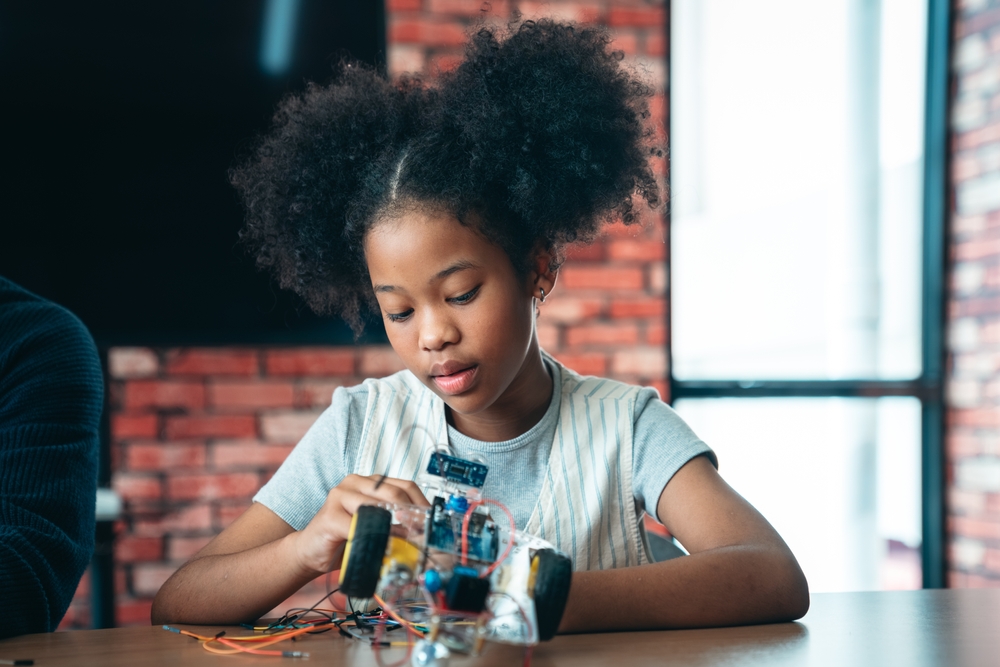
Focused student assembling a robotic vehicle independently before group collaboration demonstrating the individual contribution dimension of STEM and teamwork skills

How STEM Develops Teamwork Skills in Elementary Students

STEM and teamwork skills are more deeply connected than most parents realize. When children work through an engineering design challenge together, debug a shared coding project, or analyze data as a group, they are not simply completing a task. They are practicing one of the most complex and important sets of competencies a person can develop: the ability to collaborate productively with others under conditions of uncertainty, disagreement, and shared accountability.

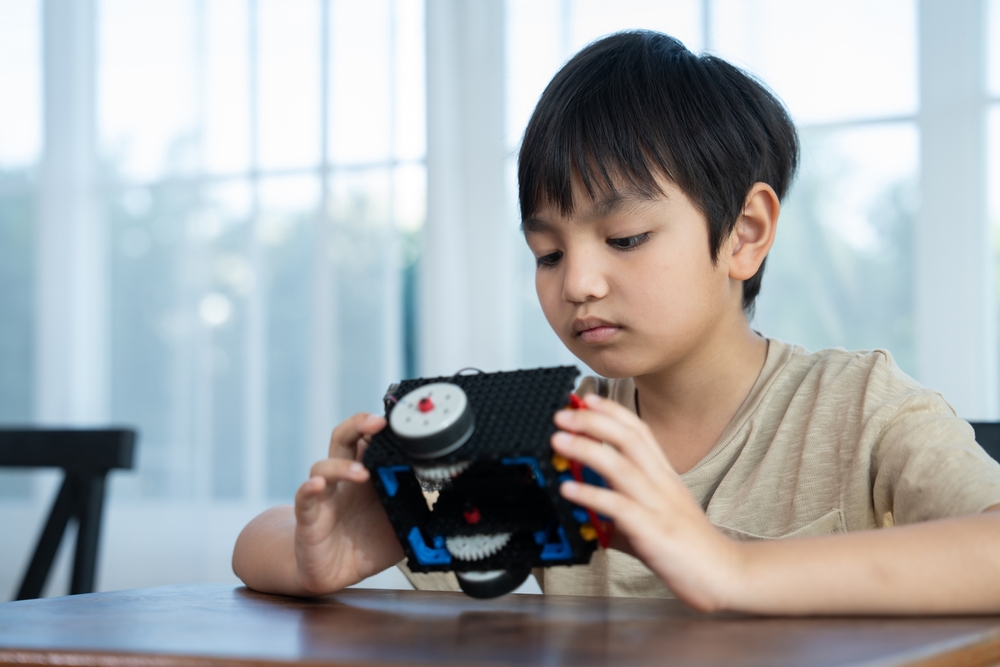
Focused student carefully examining a self-built robot in an engineering lab demonstrating how STEM critical thinking skills develop through hands-on applied learning

How STEM Builds Critical Thinking Skills That Last a Lifetime

STEM critical thinking skills are among the most durable and transferable abilities a child can develop during their elementary years. While the term critical thinking is widely used in education, it is rarely defined precisely enough to be useful. This blog explores what critical thinking actually means in the context of STEM education, how it develops across the elementary grades, and why parents should treat it as one of the most important outcomes of a quality K-8 program.

Frustrated child leaning against a chalkboard with math equations illustrating the emotional experience of STEM education and math anxiety in elementary school

Can STEM Education Help Children Overcome Math Anxiety?

STEM education and math anxiety may seem like an unlikely pairing at first. Math anxiety is one of the most common barriers to academic success in elementary school, and STEM education is, at least in part, built around mathematics. Yet a growing body of evidence suggests that the right kind of STEM learning environment is one of the most effective ways to reduce math anxiety in children, precisely because it changes the relationship between the student and the subject.