
How Does Coding for Kids Build Problem-Solving Skills?
- Alex Marchuk
- July 12, 2026
- 10 min read
STEM
Table of Contents
- 1. What Coding for Kids Actually Teaches Kids Beyond Programming
- 2. Breaking Big Problems Into Small Steps
- 3. Why Debugging Builds Real Problem-Solving Skills
- 4. How Trial and Error Shapes a Child's Thinking
- 5. Everyday Examples of Coding and Problem-Solving
- 6. Skills That Carry Over Beyond the Screen
- 7. Age and Readiness for Learning to Code
- 8. Simple Ways to Start Coding at Home
- 9. FAQ
- 10. Watching Problem-Solving Happen in Real Time
If your child has ever gotten stuck on a coding project and kept trying different fixes until something finally worked, you have already seen the real value of coding for kids. It is not really about the code itself. It is about what happens in a child’s head while they try to make it work.
Most parents hear about this and think of screen time or a future tech career. Those things matter less than what is actually happening underneath. Every time a child debugs a broken program, they are practicing a skill that has nothing to do with computers at all.
This guide breaks down exactly how coding builds real problem-solving skills, what that looks like in practice, and how to start at home without any special background or technical experience.
1. What Coding for Kids Actually Teaches Beyond Programming
Coding for kids teaches far more than syntax and commands. Every coding project is really a series of small problems stacked on top of each other. A child has to figure out what they want to happen, break that goal into steps, and test whether each step actually works.
This process builds patience in a very direct way. A program rarely works on the first try. A child who keeps adjusting and testing is practicing persistence, not just typing commands.
It also builds a habit of checking your own work. Coding gives instant feedback. If something is wrong, the program simply does not run the way it should, and there is no way to fake it.
This mirrors how STEM builds critical thinking skills that last a lifetime, since both depend on testing an idea and adjusting based on what actually happens.
2. Breaking Big Problems Into Small Steps
Breaking a big problem into small steps is one of the most useful skills coding teaches. A child who wants to build a simple game cannot do it all at once. They have to decide what happens first, then next, then after that.
This kind of thinking is called sequencing. It matters far beyond coding. A child who can break a school project into smaller tasks, or plan out steps for a science experiment, is using the exact same skill.
Teachers sometimes call this “chunking” a problem. Coding makes this concept concrete because a child can see immediately whether their steps are in the right order.
3. Why Debugging Builds Real Problem-Solving Skills
Debugging might be the single most valuable skill coding for kids actually teaches. Debugging means finding out why something does not work, then fixing it without starting completely over.
Most people, including adults, want to avoid mistakes. Coding flips that instinct. A mistake in code is simply information. It tells a child exactly where to look next.
Children who practice debugging regularly get more comfortable with being wrong. They learn that a mistake is not a stopping point. It is just the next step in solving the problem.
This comfort with failure carries into schoolwork, sports, and everyday challenges. A child who is used to debugging code tends to handle a wrong answer on a math test with less frustration.
Not every screen activity marketed toward kids builds this kind of thinking. Many educational apps walk a child through a single correct path with no real room to fail. That structure teaches a specific answer, not a way of thinking.
Genuine coding practice works differently. There is rarely only one way to solve a problem. A child might build a working project that looks nothing like a friend’s version, and both can be correct.
Parents comparing tools can use a simple test. If an activity only has one right answer and one path to it, it is closer to a worksheet than real coding practice.
4. How Trial and Error Shapes a Child's Thinking
Trial and error sits at the center of how coding shapes a child’s thinking. Instead of asking an adult for the answer right away, a child learns to test an idea first and see what happens.
This shift matters because it builds independence. A child who tries three different solutions before asking for help is thinking more like a problem-solver and less like someone waiting to be told what to do.
Coding also teaches kids to hold several ideas in their head at once. They must remember what they tried, what worked, and what still needs fixing.
5. Everyday Examples of Coding and Problem-Solving
There are many everyday examples of how coding and problem-solving connect. A few common ones include:
- Fixing a game that will not start. A child has to check each part of the code separately to find what broke, which teaches methodical thinking instead of guessing randomly.
- Making a character move correctly. Getting movement right often takes several attempts, teaching a child to test small changes one at a time.
- Building a simple animation. Sequencing frames in the right order strengthens the same planning skill used in writing or following multi-step directions.
- Combining two ideas into one project. Merging a game with a drawing tool, for example, forces a child to think about how different parts of a system affect each other.
None of these examples require advanced software. Many free, beginner-friendly tools are built specifically for children just starting out. Families curious about this connection can also see it in this STEM program in Brooklyn, NY, where similar hands-on problem-solving happens well beyond coding alone.
6. Skills That Carry Over Beyond the Screen
The problem-solving skills built through coding do not stay confined to a screen. A child who learns to break down a coding challenge often applies that same approach to a messy bedroom, a tricky homework assignment, or a disagreement with a sibling.
According to Code.org, learning computational thinking through coding helps children develop problem-solving, logical reasoning, and creativity, skills that apply across every subject, not just technology.
Confidence grows alongside these skills. A child who fixes their own coding mistake, without giving up, starts to trust their own ability to work through hard things. That trust shows up well beyond the computer.
7. Age and Readiness for Learning to Code
Age plays a real role in how coding for kids should be introduced. Very young children, around ages five to seven, benefit most from simple block-based tools that avoid typing altogether.
By ages eight to eleven, most kids can handle more structured projects with a bit more complexity, while still relying on visual, drag-and-drop coding blocks rather than written code.
According to the National Science Foundation, block-based platforms like Scratch are specifically designed to help students in this age range build computation and problem-solving skills before moving into more advanced programming later on.
There is no single “right” age to start, and starting a little later does not put a child behind. What matters more is whether the activity stays challenging without becoming frustrating, and whether a child is given enough room to test ideas on their own before an adult steps in to help.
8. Simple Ways to Start Coding at Home
Getting started with coding for kids at home does not require any technical background from parents. A few simple habits make the biggest difference.
- Start with block-based tools. Free platforms let children build projects by dragging blocks together instead of typing complex commands.
- Let your child struggle a little before helping. Jumping in too fast removes the exact problem-solving practice that makes coding valuable.
- Ask questions instead of fixing it yourself. A simple “what do you think is happening here” often leads a child to the answer on their own.
- Celebrate the debugging, not just the finished project. Pointing out how they solved a tricky bug reinforces that the process mattered as much as the result.
These habits work whether a child is using a laptop, a tablet, or a simple coding kit, since the thinking involved matters more than the specific tool or platform a family happens to choose.
Research backs up what many parents notice firsthand. According to a peer-reviewed review of studies published through ERIC, coding activities are linked to better problem-solving and step-by-step thinking, especially when kids get real room to test and revise their own ideas.
This matters because it shows the benefit is not just anecdotal. Beginner-level coding practice appears to build the same thinking patterns kids use in math, science, and everyday reasoning.
The research also points to something practical for parents choosing a program. Benefits showed up most clearly when children had real chances to test and revise their own ideas, more than with any specific tool or coding language.
9. FAQ
It means teaching children the basics of giving instructions to a computer, usually through simple, visual tools. The real value comes from the thinking involved, not memorizing a programming language.
Not at first. Most programs for young children use block-based tools where kids drag and connect pieces instead of typing. Typed coding usually comes later, once a child is comfortable with the basic logic.
A mistake is simply something that does not work yet. Debugging is the process of figuring out why, testing a fix, and trying again. It turns a frustrating moment into a specific, solvable task.
Yes. Breaking problems into steps, testing ideas, and staying patient through trial and error are skills that transfer directly to schoolwork, sports, and everyday problem-solving.
No. Asking good questions matters more than knowing the answer. Letting a child work through a stuck moment, rather than solving it for them, is often more valuable than technical expertise.
There is no fixed timeline. Many parents notice improved patience and persistence within a few months of regular, low-pressure practice.
10. Watching Problem-Solving Happen in Real Time
Coding for kids is ultimately less about computers and more about how a child learns to think through a problem. Breaking a challenge into steps, testing an idea, and fixing what does not work are skills that last well beyond any single project.
The strongest programs treat mistakes as useful information instead of something to avoid, and give children real time to test their own solutions instead of following someone else’s steps exactly. Families interested in how this fits within a broader curriculum can look at the full range of programs offered.
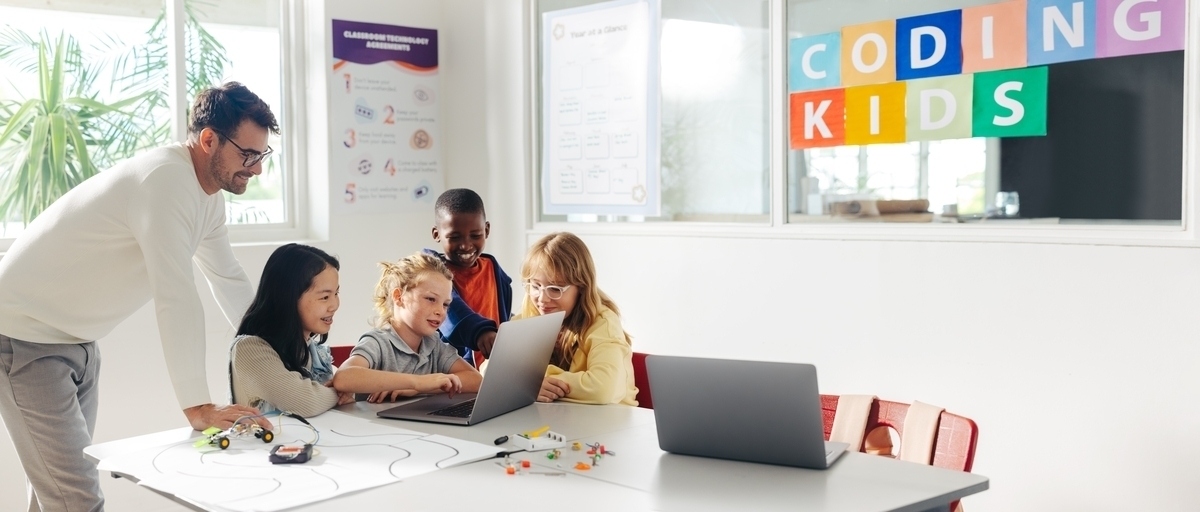
Watching a child work through a coding challenge on their own, false starts included, is one of the clearest ways to see genuine problem-solving skills develop in real time. The pause right before they figure it out on their own is often where the real learning actually happens.
Key Takeaways
- Coding for kids builds real problem-solving skills through debugging, sequencing, and trial and error, not just programming knowledge
- Mistakes in code function as useful information rather than failures, which builds comfort with being wrong
- These skills transfer directly to schoolwork, sports, and everyday challenges beyond the screen
- The clearest sign of genuine practice is real, open-ended problem-solving, not a single fixed path to one correct answer
LOOKING TO BUILD REAL PROBLEM-SOLVING SKILLS?
Seeing this kind of thinking develop firsthand is the clearest way to understand how coding actually supports a child’s growth.
Disclaimer: The information in this blog is intended for general educational purposes only. Curriculum structures and terminology vary between schools. No specific academic outcomes have been stated or implied.
References
- Code.org. (n.d.). Code.org for parents: At-home computer science resources. https://code.org/en-US/parents
- National Science Foundation. (2026). Educational resources: Computing. https://www.nsf.gov/focus-areas/computing/educational-resources
- [Author]. (2023). Children's coding experiences and computational thinking: A review. ERIC. https://files.eric.ed.gov/fulltext/EJ1390532.pdf